Showing posts with label parsley. Show all posts

Friday, April 5, 2013

Hummus


Channa Dal Garbanzo Beans Left - White Garbanzos Right
I know, really... a blog about hummus?  Yep, based on popular request, here it is.  Hummus can be plain and boring or it can be as exciting as you want to make it. You can call it humus, hummus, or hommus, but every time I make it, it's gobbled up with enthusiasm.  It's easy to make and way better than spreads with lots of unknown ingredients from the store.

For me, hummus started out a long time ago with my 1977 edition of Molly Katzen's,  Moosewood Cookbook.  

I've altered the recipe over the years to suit my taste and once again I've had to find some more precise measurements rather than a dash, a squeeze, and a taste.

Hummus is a rich and tasty spread made from garbanzo beans, tahini, garlic, and spices.  It is rich in protein and can be used in many ways.  As the basis of a delicious sandwich, a dip with crackers or pita bread, or as an entire meal surrounded with vegetables and breads.  It's simple to make and healthy beyond measure.  Don't let anyone knock it until they've tried it, as hummus has a huge likability factor.

Before the recipe, let's talk beans.  You can use canned garbanzo beans or as I prefer, cook your own.  If you are in the mood to cook your own, may I recommend finding Channa Dal garbanzo beans.  These are a little smaller and are a rich dark brown with their skins on.   The traditional white garbanzos are fine, I just prefer the darker, nuttier flavor of the Channa Dal beans.  You can most likely find them at an organic food store.  Always use organic ingredients whenever possible - You're worth it.

Hummus Basics 
1 cup rounded of dry garbanzo beans
Rinse the beans and place them in a pot.  Cover with water and bring to a boil.  Cover the pot and leave sit for 1-2 hours.  Drain and rinse the beans and cover with fresh water.  Cook until the beans are tender (about 90-120 minutes or 15-20 minutes in a pressure cooker).  Cool the beans to room temperature
or
use 2 cans (about 2 cups drained) of garbanzo beans with most of the liquid drained off and kept for later, if needed.

Place the following in a food processor:

the cooled or canned garbanzo beans with a little of the liquid
3-5 cloves of garlic
2/3 cup of tahini (tahini should be stirred before measuring)
1/4 cup of lemon juice (+/- to your taste)
2 tablespoons of tamari (+/- to your taste)
1/4 cup packed of minced parsley or 2 tablespoons dry parsley
1/2 - 1 teaspoon of salt (to taste)

blend this all together until very smooth.  It takes a bit of blending to get a really smooth consistency.  If necessary, add additional liquid from the beans or additional lemon juice based on taste to make the consistency smooth and not dry.

That's ready to eat!

I like to make a double batch and freeze it in small quantities that I can pop out for lunch or for a quick appetizer when needed.

You can also experiment with different flavors added to the hummus.  Here are a few suggestions to try:

pitted greek olives (watch the tamari and salt with this one)
fire roasted red peppers
fresh basil instead of parsley
2 teaspoons of curry
artichoke hearts 
cayenne or black pepper
or any combination that sounds tasty.

You can also experiment with different beans.  Try white beans like cannellini or great northern, or try black beans, or lentils.  They all make a delicious hummus.

A favorite lunch or dinner is 2 slices of toasted sourdough bread, spread with a thick layer of hummus, add a big slice of ripe tomato, some fresh garden lettuce, spinach, or sprouts.  If it doesn't start falling apart or the hummus isn't oozing out, you didn't put enough on!

Enjoy!

Sunday, January 20, 2013

It's Lemon Season!

We tend to think of lemons as a summer fruit, however now is harvest time for most varieties.  Isn’t it nice to get a bit of sunshine in the middle of the cold dark winter?

Lemons are definitely good for much more than lemonade.  They heighten other flavors and add a brightness to many dishes.  They are full of vitamins, fiber, potassium, and lemony goodness.

Look for small, heavy fruit without bruises, cuts, or blemishes.  If you plan to use them fairly soon, leave them on the counter, or for longer storage, loosely wrap them and keep them in the crisper drawer of the refrigerator.  If you store them in the frig, remember to take them out and let them warm up before using them.  Roll the lemon gently to loosen the juice sacks and then cut the lemon in half crosswise and remove the juice and pulp on a reamer or cut them lengthwise into quarters and squeeze out all the juice and pulp by hand.

I’m going to give you three favorite uses for lemons and another little secret is that it is also avocado harvesting time... can you beat the flavor of lemon and avocado too?

A delicious salad dressing is made with lemon and garlic.  I grow lots of garlic and I love using it all winter.  This quick little recipe for salad dressing will brighten up any winter salad.  When I say winter salad, I mean anything goes on a salad - except tomatoes.  To a chopped romaine, I add anything like cooked beans, grains, dried fruit like cranberries, or chopped apples, pears, or beets, carrots, or cooked potatoes, but never tasteless winter tomatoes.

Lemony Garlic Dressing

  
2-3 medium cloves of garlic - minced
3 lemons to make ½ cup of juice
1 tablespoon of fresh parsley - minced
1-2 teaspoons salt - to taste
1 tablespoon chia seed
(optional, but makes a creamy dressing that doesn't separate)
 1 cup olive oil
½ cup water

Put all this is a blender and let it whirl until fully blended.  It will come out creamy and delicious.

Next, let’s make a simple and oh so delicious soup to go with that salad:

I had this soup years ago and never actually knew the name of it until recently when I was searching for just what it was.  Avgolemono is a classic Greek soup made with egg and lemon.  At first the pronunciation of the name might look a little overwhelming but it is Avgo (say - ah go (egg)) and lemono (say - lema no (lemon)) and there you have it.

There are some similarities to a Senegalese Lemon Soup, but the one I remember was Greek.


 Avgolemono

 8 cups chicken stock
 1 cup orzo pasta - this is Greek, or you can use rice
 4 large eggs, separated
 Juice of 3-4 lemons
 Freshly ground black pepper
Greek yogurt and lemon zest (optional)

Bring stock to a boil and add orzo or rice, simmering until tender, about 20 minutes. Season the stock to taste with salt, if necessary.

Whisk the egg whites in a separate bowl until peaks form.  Add the yolks and lemon juice, whisking continuously until it is all combined.

Temper the mixture by slowly adding about 2 cups of the hot stock into the egg-lemon mixture, while beating vigorously to prevent the eggs from solidifying.

With the heat turned off, add the beaten mixture back into the soup pot, whisking thoroughly to blend it all together.

Serve immediately with a nice romaine salad and a warm crusty bread.  I like to serve with a dollop of Greek yogurt in the middle with a little lemon zest and cracked black pepper on top.

I’m not through with lemons yet!  


I don’t necessarily recommend the soup and the following recipe together as that might be a bit much.  But, for that Sunday dinner, I have a local Hutterite chicken defrosted in the refrigerator and more garlic and lemons.  Here is a nice Mediterranean version of a roasted chicken.

                                                                                      Mediterranean Roasted Chicken


1 large, local roasting/frying chicken or about 4 pounds of cut up chicken

2 lemons - washed and chopped (skin and all) into about 8 pieces each


6-8 large cloves of garlic - peeled, smashed, and cut into ½" pieces


1/3 cup extra-virgin olive oil
2 fresh rosemary sprigs or 1 teaspoon dried rosemary or Italian blend
2-3 teaspoons of sea salt and freshly ground black pepper
4 cups of new or red potatoes, skins on, washed and pared into 2" chunks

Preheat the oven to 350°F.
Cut up the chicken into pieces if using a whole chicken.  Rinse and pat dry.
Place a couple of tablespoons of olive oil in the bottom of the roasting pan and arrange the chicken skin side down.  Add the lemon sections, squeezing each one slightly to release the juice and pressing them down in among the chicken pieces. Scatter the garlic cloves and rosemary or spices over the chicken and dribble the rest of the olive oil over the chicken and sprinkle it liberally with salt and pepper.

Transfer to the preheated oven and bake for about 30 minutes.

Raise the oven temperature to 400°F. Turn each piece of chicken over and add the potatoes to the pan, stirring to coat them well with olive oil. Return the dish to the oven and roast for another 40-50 minutes, or until the chicken and the potatoes are crisp and browned.

By now the smells of this roasting will have you a bit delirious, so serve it up with that salad and a glass of good red wine.

Enjoy!

Sunday, November 11, 2012

Hearty Black Bean Soup

The weather has taken a turn towards winter and a hearty winter soup seems in order.  I hear from some people that they’ve never found a good black bean soup recipe and from others that the ones they have tried are too spicy for their family’s taste.  
Give this one a try.  I’ve worked on this recipe over the years to both simplify it and to combine some family friendly flavors.


Hearty Black Bean Soup

2 ½ to 3 cups of dry black beans (or 2-3 cans of black beans)
2 Tablespoons olive oil
4 cloves garlic               
1 large onion chopped
2 carrots finely diced or shredded
½ pound ground venison, lean beef, or turkey (optional)
2 Tablespoons taco seasoning
1 Tablespoon dried cilantro or parsley
1 28oz can of diced tomatoes or equivalent home canned

Begin by quick soaking the black beans.  Check the beans for small stones, rinse, and place in a large pan with 2-3 quarts of water.  Bring the beans to a boil and boil for 1 minute.  Turn off the heat, cover the pan and leave it set for 1-2 hours.   This method is preferred to the overnight soak as it removes more of the small chain carbohydrates that cause some people digestive problems.
After the beans have set, drain and rinse the beans under running water.  Return the beans to the pan with enough water to cover the beans by an inch or two.  Do Not add salt...Cook the beans for 60-120 minutes until they are done.  Add water as necessary.  As beans age, they lose moisture causing the cooking times to increase.  Fresh beans cook faster!
If you have a pressure cooker, an essential tool in my kitchen, you can cover the beans with 1 inch of water, bring up the cooker to pressure, and cook for 5 minutes.  Let the pressure reduce naturally.
There is the third alternative, if you prefer not to bother with cooking the beans yourself, or if you are in a big hurry, you can use 2-3 14oz cans of black beans instead.
Set the beans aside and begin to prepare the rest of the soup.


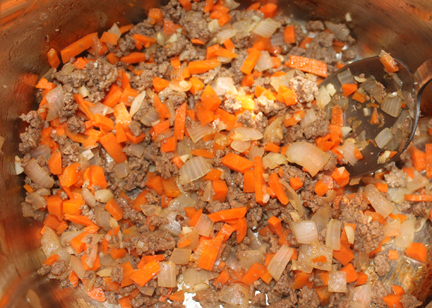
Browning optional meat, saute onion, garlic, carrot
Add the olive oil to a soup pot and begin to lightly brown the meat (optional).  Add the onion and cook until it is translucent.  Add the garlic and diced carrot and saute briefly.

Add the cooked beans, taco seasoning, cilantro or parsley and the 28 oz can of diced tomatoes.  Taco seasonings are not all created equal.  Some have high salt content, particularly the ones in envelopes.  

Combine all ingredients and simmer


While these are ok to use, be sure to check taste before adding additional salt.  I use a bulk organic taco seasoning from Frontier and it does not have salt.   I usually add about 2 teaspoons of salt at this point but if you are using canned beans or salted taco seasoning you will not need this much salt.  The best measure of how much salt you need is to taste.  Add small amounts and taste again.
 

Once all the ingredients are in the pot, cover the soup and let it simmer for at least an hour to blend all of the flavors.

Serve the soup in your favorite soup bowls and you can accompany it with a few corn chips for crunch.

Like every soup, this soup gets even better the second day so make a big pot and take a day or two off cooking!

Enjoy!


Sunday, April 1, 2012

Spring is in the Air!

The Window Herb Garden
We’ve made it through the month of March with it’s predictably cold and wet weather. Not that we can’t expect more of it in April, but the sun is well on it’s way back north. That means planting time!  I’ve had years of experience with trying to plant tomato seeds and the like in trays indoors, only to have them become tall and spindly and never make it to the garden. In my well earned wisdom of senior years, I don’t plant anything before April. Here on this mountain, the earliest outdoor planting can safely occur, is Memorial Day and even then sometimes things have to be covered from an occasional frost or snow flurry.

To curb my appetite for getting started, I get my seeds early, organize and dream, and just for fun plant some little pots of herbs for a kitchen window.  A few years back I was in need of pot markers. I searched around looking for something to mark the plants that suddenly go from a single small row in a seed tray to an entire tray or two in the greenhouse.  Here is my secret revealed!  I spied  a couple of yogurt containers in my recycle bin and a light came on in my head.  My markers just became free and unlimited.

Unlimited pot markers!
  
I bet you have a few of these empty containers around or know where to find them.  I start by cutting straight down the side and then around the bottom, removing the bottom entirely.  Then I cut strips along the side, about ½ inch each and point the bottom.  I use a black sharpie to write my plant name on the white side. 


I love these markers!  I save them from year to year for the plants that I always grow and always seem to need a few more for the plants I give away.


This year I bought a heat mat for starting seeds - wow does that make a difference!  Heat mat or not, put your little seeded pots in a plastic bag, blow it up like a balloon and put a twist tie on it.  This helps to keep the seeds evenly moist until they emerge.
 
Put your seed pots in a plastic bag to raise the humidity.
April's full moon is happening on the 6th so spring planting is ON!